Style render
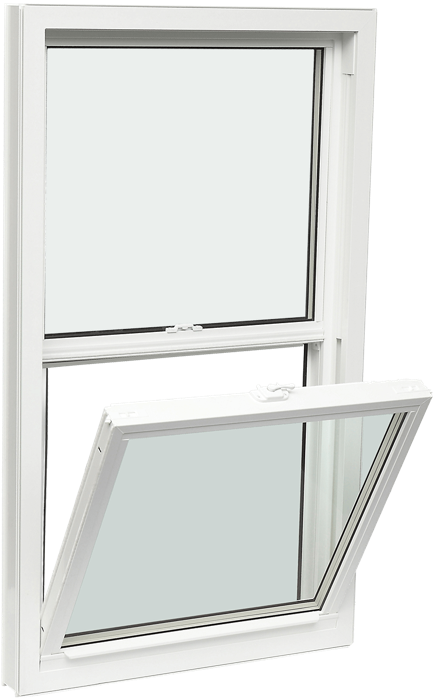
In place — Single-Hung Windows
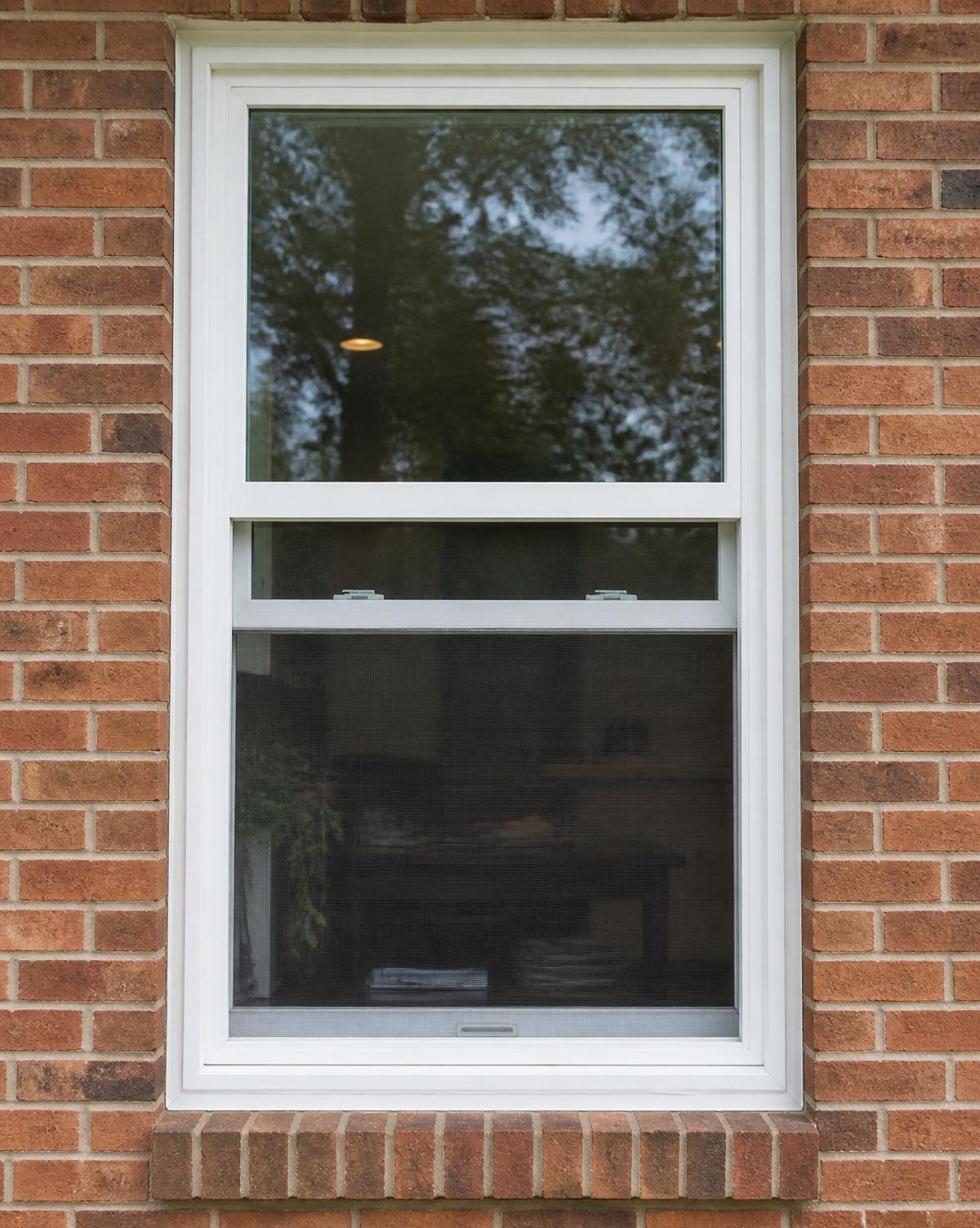
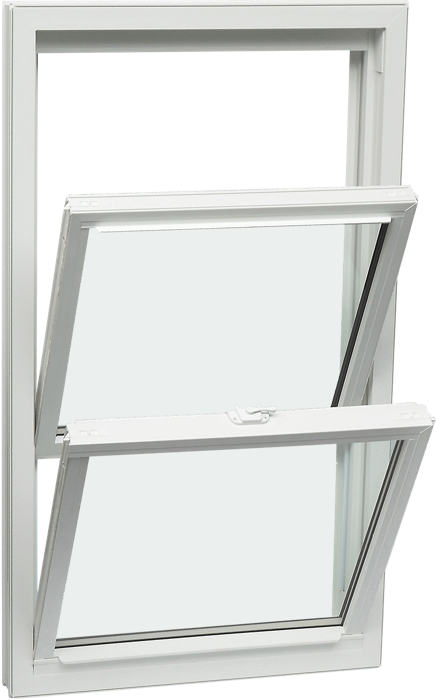
Diagram — closed
Diagram — open
Swipe to compare
How it works
A single-hung window has a movable lower sash and a fixed upper sash. It reads as a classic residential window and doesn't project outward, so it works well where exterior clearance is tight.
Operation
Vertical slide
Ventilation
Moderate
View
Standard
Space Required
No exterior clearance required.
Key features
- Lower sash slides vertically
- Upper sash stays fixed
- Traditional architectural style
- No exterior projection
- Space-saving and simple to operate
- Screen sits inside the opening
Best for
Traditional façades and openings with limited exterior clearance.
Common applications
Bedrooms · Traditional homes
Cleaning
Interior side of the operable sash is accessible from inside.
Colours
Full standard colour palette.
Grilles
Colonial grilles suit traditional single-hung proportions.
Residential & Commercial
Residential and light-commercial inquiries welcome.
Glass options
Every window is manufactured to order — the following options are available depending on style and size. Final configuration is confirmed at quotation.
Technical Specifications
How these windows are built.
The following construction, glazing and finishing details apply to the single-hung windows we supply and install. Exact configuration is confirmed on your quotation.
Installation methods
How a window is installed matters as much as the window itself. We quote three installation methods and recommend the one that suits the condition of your existing opening.
- Brick-to-brick (recommended)
- The old window is removed right back to the house framing, so the rough opening can be re-insulated and re-flashed. Interior trim and jamb extensions can be upgraded at the same time, and you can choose between three brickmould profiles. This is the right choice for openings that are damaged, rotted or poorly insulated, and it delivers the largest efficiency gain of the three methods.
- Retrofit
- The existing frame, exterior cladding and interior trim stay in place and only the window itself is replaced. It is faster and less expensive than a full replacement and works well when the existing frame is sound and already well insulated. You still get the full glazing and hardware upgrade.
- Stud-to-stud
- A full removal back to the framing, finished on the exterior with caulking or aluminum flashing rather than a brickmould. Useful on siding, stucco and board-clad walls, and a strong efficiency upgrade over a retrofit.
Frame and sash construction
The vinyl windows we supply are extruded from a 100% lead-free uPVC compound and welded rather than mechanically fastened.
- Multi-chamber uPVC profile
- A high number of sealed internal air chambers inside the frame and sash improves thermal performance, structural rigidity and sound attenuation compared with hollow single-chamber profiles.
- Fusion-welded corners
- Corners and internal walls are heat-fused into a single piece. There is no adhesive or sealant in the joint to shrink or fail, and the result is a continuously airtight and watertight frame.
- Maintenance-free finish
- The lead-free powder compound resists impact and discolouration and will not crack, blister, warp or need repainting. Cleaning is soap and water.
- Certified performance
- Units are built to current North American fenestration standards and are available in ENERGY STAR qualifying configurations for the applicable Canadian climate zone.
Glazing and energy performance
Double and triple glazed sealed units are available on most styles and sizes, with a choice of low-emissivity coatings matched to the orientation of the opening.
- Double glazing
- Two panes with an insulating cavity, typically argon filled. The standard configuration for most replacement projects and the baseline for ENERGY STAR performance.
- Triple glazing
- A third pane and a second insulating cavity for the highest thermal performance, the biggest reduction in exterior noise and the warmest interior glass surface. Availability depends on style, size and weight.
- High solar-gain low-E
- A coating tuned to let winter sun through while reflecting interior heat back into the room. In an argon-filled double-pane unit it delivers roughly a 0.26 U-factor with about 77% visible light transmission. Best on north-facing and shaded elevations.
- Balanced low-E
- The all-climate coating. Around a 0.25 U-factor, a 0.40 solar heat gain coefficient and about 70% visible light transmission, with no haze or blue cast.
- Solar-control low-E
- A triple-silver coating for hot, sun-exposed elevations: around a 0.24 U-factor and a 0.27 solar heat gain coefficient while still passing about 63% visible light, with no interior tint.
- Fourth-surface low-E
- A coating applied to the room side of the inner pane. Paired with a low-E cavity coating and argon, a double-pane unit reaches a centre-of-glass U-factor near 0.20 — better than a clear triple-pane assembly, without the extra weight.
- Clear and specialty glass
- Clear, tempered safety, laminated, obscure and decorative privacy patterns, plus architectural glass for feature openings, are all available.
Warm-edge spacer
The edge of a sealed unit is where most glass-edge heat loss and condensation start. We specify an all-foam, no-metal, dual-seal warm-edge spacer rather than a conventional metal one.
- Why no metal
- A metal spacer conducts heat straight across the glass edge and can cost a new window a large share of its stated insulating value. A structural foam spacer does not.
- Dual-seal construction
- One sealant works as a high-strength structural adhesive holding the unit together; a second acts purely as a moisture-vapour barrier. Single-seal units ask one sealant to do both jobs and tend to fail sooner.
- Condensation and mould resistance
- A warmer glass edge means less perimeter condensation, which is what stains sills, peels paint, rots frames and feeds mould growth inside window and wall openings.
- Durability
- The foam spacer flexes with seasonal expansion and contraction instead of stressing the seal, which is what keeps a sealed unit clear over the long term.
Colours, trim and exterior finishing
Interior and exterior finishing is specified per opening, so a single project can mix profiles and colours to match different elevations.
- Over 100 colours
- Interior and exterior frame colours can be specified independently — a black or bronze exterior with a white interior is a common pairing. Custom colour matching is available.
- Four-to-six coat paint process
- Coloured frames receive four coats for lighter shades and six for darker ones, using a paint system formulated specifically for PVC. Darker colours get the extra build because they run hotter in direct sun.
- Woodgrain stain finishes
- A three-stage stain is available for interior and exterior surfaces where you want the appearance of a natural wood finish without the maintenance.
- Interior trim and casing
- Vinyl trim packages include step casing, classic rosettes and contemporary rosettes, with a choice of mitred or square corner treatments.
- Jamb extensions
- Four standard jamb depths cover most wall assemblies, with wood jamb extensions, frame mouldings and corner blocks available for deeper or non-standard walls.
- Brickmoulds
- Exterior brickmoulds are extruded from the same durable uPVC compound in 5/8", 1-1/4" and 2" profiles, colour-matched to the frame and requiring no maintenance.
- Grilles
- Colonial, ladder and custom grille patterns are available between the glass, or as simulated divided lites applied to the glass surface for a more traditional shadow line.
Related window styles
Ready when you are
Ready to upgrade your home?
Free on-site estimates across the GTA. No pressure, no upsells — just a proper quote from a real installer.